

Things Gautam Adani Revealed at Vishaka Renewables’ Silver Jubilee
Home / blogs
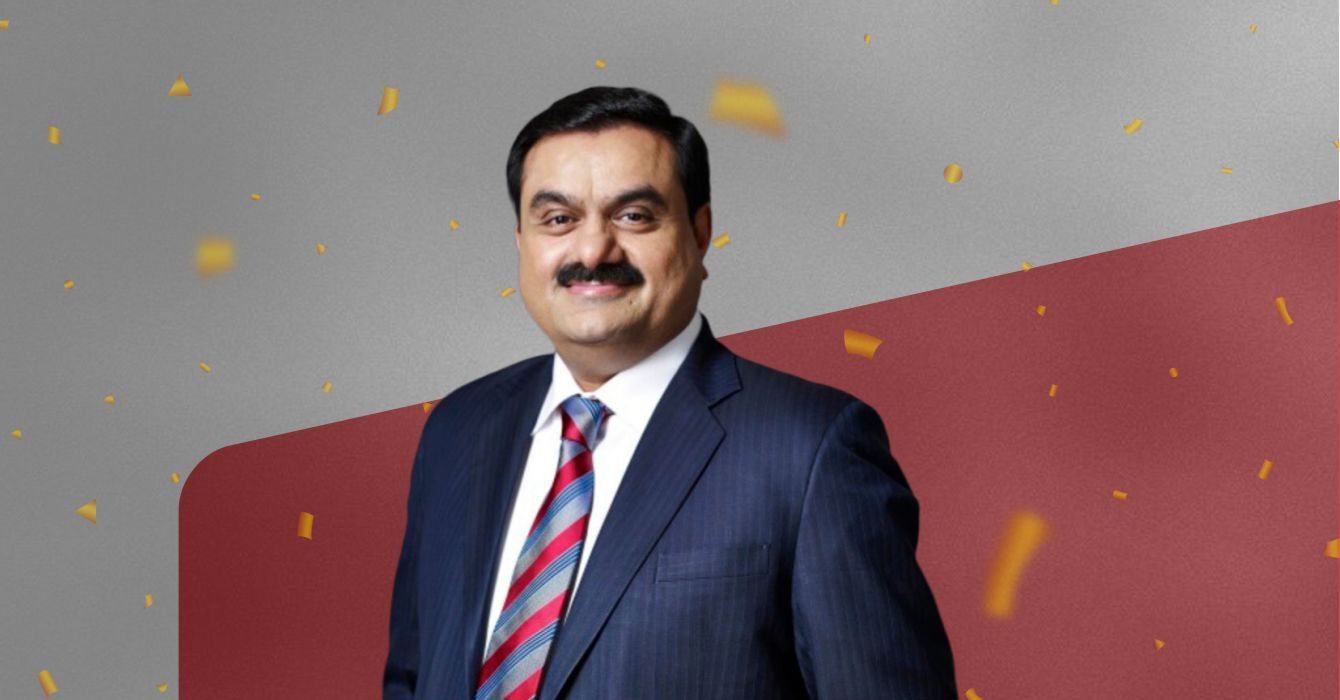
India’s push for renewable energy has created some real success stories, and Vishakha Renewables plays a key role in it. The company just hit its 25-year milestone, a Silver Jubilee and you can feel the buzz in the industry. Even big names like Gautam Adani have acknowledged, emphasizing the role of robust collaborations and domestic solar materials manufacturing are shaping India’s clean energy future.
Vishakha Renewables originated as an ambitious concept by Jigish Doshi. Now, it’s the country’s largest solar glass manufacturer, supplying the raw materials that support the progress of India’s solar projects. Over the years, they have built a fully integrated ecosystem for solar materials, and they’re a key part of India’s renewable energy supply chain. Their story is not just about growth, it’s about how Indian companies are stepping up to be at the forefront of renewable energy manufacturing.
Reflecting on this journey during the Silver Jubilee celebration, Gautam Adani noted:
“India’s renewable energy future will not be built only through solar parks and power plants. It will be built through strong manufacturing ecosystems that supply the components and materials powering this transformation.”
For Vishakha Renewables, this milestone represents far more than a celebration of longevity, it symbolizes 25 years of conviction, innovation, and industrial collaboration.
The Idea That Started It All: Jigish Doshi’s Vision for a Solar-Ready India
Back in 1999, when Jigish Doshi started shaping his vision for the company, very few people in India considered solar energy seriously. Most of them viewed renewables as something for the distant future, not yet as a genuine commercial opportunity.
But Doshi looked ahead and saw things differently, he was convinced that India’s energy future would depend on manufacturing capabilities.
“When we first spoke about building a company around solar materials, many believed the market was too small,” recalled Jigish Doshi. “But we believed that one day India would require a strong manufacturing backbone to support its renewable ambitions.”
It began modestly, merely a concept, indeed. However, over time, that idea grew into something bigger: building a solar components manufacturing hub in India, so the country would not have to rely so much on imports.
That’s how Vishakha Renewables came to life in Ahmedabad back in 2016. Today, they stand out as one of India’s top solar materials manufacturers.
Today, Vishakha produces four critical raw materials used in solar panel manufacturing:
- Solar Glass
- Solar Aluminium Frames
- Solar Encapsulants
- Solar Backsheets
This integrated capability makes Vishakha one of the few companies globally able to supply multiple solar panel raw materials under one manufacturing ecosystem.
Vishakha Renewables achieved a significant milestone by establishing India’s biggest solar glass manufacturing plant. In just two years, they built a huge solar glass furnace that produces 660 tonnes every day.
This facility powers around 4.8 GW of solar panel installations each year, providing a significant boost to India’s solar manufacturing power.
Vishakha Renewables partnered with Asahi India Glass Ltd. (AIS), one of the leading glass manufacturers in the country, to accomplish this project.
The plant has BIS certification and gets its quality checked in NABL-approved labs, thus, the solar glass effortlessly meets global standards.
Speaking about the project’s rapid execution, Gautam Adani remarked:
“What Vishakha has achieved here is remarkable. This is not simply an Indian project trying to match global standards—this is an Indian benchmark setting a new global standard.”
Encouraged by the success of the first phase, Vishakha has already begun Phase 2 expansion, which will increase production capacity to 1,260 tonnes per day.
Once completed, the facility will support up to 12 GW of solar panel production annually, making it the largest solar glass manufacturing capacity in India.
Creating a 12 GW Integrated Solar Manufacturing Ecosystem
What really sets Vishakha Renewables apart is not only about their scale, it’s the way everything operates in unison under one roof.
They have developed an extensive 12 GW solar manufacturing system that brings glass, aluminium, and polymer film production into a single, streamlined supply chain.
This level of integration is rare in the global solar manufacturing industry.
The aluminium division plays a crucial role in this ecosystem. Vishakha operates India’s only fully integrated aluminium frame facility dedicated to solar panels, supported by the country’s largest anodising plant with 32 tanks.
Right now, they are running at 3.5 GW capacity, but they have already started gearing up to hit 10 GW soon.
Besides that, Vishakha operates India’s biggest solar encapsulant production unit for polymers, with a 6 GW capacity.
Put it all together, and it’s clear, Vishakha Renewables stands out as one of India’s most comprehensive solar materials manufacturers.
According to Jigish Doshi, this integration was always part of the long-term vision.
“Our goal was never to manufacture a single component. We wanted to build a manufacturing ecosystem that could support India’s solar industry from the ground up.”
Strategic Partnerships Driving Industrial Growth
The story of Vishakha is remarkable due to its emphasis on creating long-term alliances.
Take the collaboration with Asahi India Glass (AIS). AIS offered global proficiency in glass, while Vishakha contributed its deep experience in solar materials and supply chains. In partnership, they went beyond a simple handshake, they significantly reduced India’s dependence on imported solar glass and gave a real boost to local manufacturing.
Then there’s the Adani Group. Vishakha and Adani have been working together since 1992, thus, this is not a short-term deal but it represents a bond that has endured over the years.
At the Silver Jubilee celebrations, Gautam Adani reflected on the journey so far. He said the partnership worked because it grew from shared values, not just business interests or short-term goals. This sort of foundation makes all the difference.
“The Vishakha partnership has always been about trust and long-term thinking. Relationships like these are what ultimately shape strong industries.”
Such collaborations have helped Vishakha expand its manufacturing ecosystem while supporting the broader renewable energy supply chain in India.
Strengthening India’s Renewable Manufacturing Ecosystem
India’s drive towards renewable energy is gaining momentum, and genuinely, domestic solar manufacturing holds greater significance than before.
Solar glass, solar panel frames, encapsulants, and backsheets form the core raw materials required for solar panel production.
Vishakha Renewables raises its game through manufacturing these components within the country. Each unit they construct cuts down on imports and puts India in a stronger spot on the global solar manufacturing map.
This effort aligns closely with the government’s Atmanirbhar Bharat initiative, which encourages domestic manufacturing across strategic industries.
Vishakha Renewable’s long-term goal is to support 10 GW of solar manufacturing capacity by 2027, helping meet the country’s broader solar renewable energy targets.
European-grade technology and internationally certified production standards ensure that the company’s solar materials remain globally competitive.
Conclusion: A 25-Year Journey of Vision, Trust, and Collaboration
For Vishakha Renewables, the 25th Silver Jubilee is not just about celebrating a key milestone. It’s a reminder of how a bold concept grew into a thriving industrial force.
They started out small, just a solar materials venture. Now, they are India’s biggest solar glass manufacturer. The company’s journey reflects the power of vision, persistence, and collaboration.
As Gautam Adani noted during the celebration:
“India’s renewable future will be shaped by companies that combine innovation, manufacturing excellence, and strong partnerships.”
For Jigish Doshi and the Vishakha team, the journey continues with the same guiding principles that started it all—conviction, integrity, and trust.
“Twenty-five years ago, we started with an idea,” Doshi reflected. “Today, we are part of India’s renewable manufacturing story. And the most exciting part of that journey is still ahead.”